
Thursday, September 24 & Friday, September 25
Sessions presented virtually via Zoom
Bring your Board Chair and Trustees to AISNE’s annual Governance Conference. Board members, Heads of School, and senior leadership can learn alongside one another and focus on leadership and operational topics—from risk management to strategic planning. Sessions are held virtually and recorded, giving your school more than 15 hours of board development at a single, low price.
We will cover the hot topics in education today, create a community of support, and make intentional time for balcony-level thinking. You will come away with a solid foundation to make progress on improving your school, no matter your goals.
Bring your full board, Head of School, and senior leadership team.
AISNE Members save $100/person compared to non-members. Not a member? Join today.
| Number of Attendees | AISNE Member Schools | Non-Member School |
| Individual Registration | $325/person | $425/person |
| Whole School (ticket includes every board member and senior leader from your school). |
$2,000/school | N/A |
| Whole School Conference Ticket + Parent Workshop Series (new for 2026-27 academic year) |
$2,750 | N/A |
We strive to create an inclusive learning environment for all. If you have any questions or accessibility needs, please contact us at info@aisne.org.
Board Members Can’t Make It?
We understand scheduling your board can be difficult. Registrants who are not able to attend live sessions will have access to recordings of all topic sessions, the keynote, and the general session—more than 10 hours of learning content! Register each of your board members and unlock access to the recordings.
Thursday, September 24
Friday, September 25
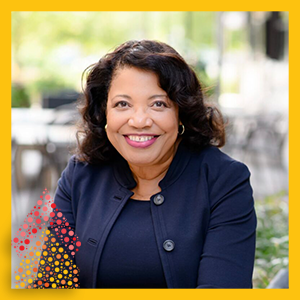 Thursday, September 24 | 9:00 – 10:00 AM
Valaida Wise | Mission Under Pressure: Governance Decisions That Define a School
Independent schools are navigating an era of extraordinary complexity. Enrollment pressures, demographic shifts, political polarization, workforce challenges, financial uncertainty, and increasing community expectations are forcing boards and school leaders to make difficult decisions with lasting consequences. In these moments, mission is often invoked—but too rarely examined. A mission is not simply a statement on a website or a paragraph in a strategic plan. The mission becomes real when schools face competing priorities, difficult tradeoffs, and pressure from multiple stakeholders. The decisions boards make in these moments reveal what the institution truly values. Valaida Wise will challenge you to consider how governance serves as a steward of mission, culture, and institutional integrity. Through stories, case studies, and reflection, we will explore how trustees and school leaders can navigate uncertainty while remaining grounded in purpose, community, and long-term responsibility. Leave with a deeper understanding of the board’s role not simply as fiduciaries, but as guardians of mission who help schools make principled decisions in complex times.
Dr. Valaida L. Wise (Val) is an accomplished leader with over 25 years of experience in educational administration, specializing in organizational management, diversity, equity, and inclusion (DEI), and strategic leadership. As President of Dr. Valaida Wise Consulting, LLC, she has supported organizations ranging from schools and universities to corporations, large and small, in conducting equity audits, developing strategic plans, and offering professional development, taking organizations of all sizes to the next level. Her career includes serving as Head of School at several institutions, where she led accreditation processes, launched innovative programs, and enhanced organizational effectiveness.
Dr. Wise earned her Ed.D. in Educational Administration and Policy Studies from George Washington University and her M.A.T. in Early Childhood Education from Trinity University. She has taught at Johns Hopkins University, the University of Wisconsin at River Falls, and other institutions, offering courses on qualitative research, diversity, and organizational behavior. Her extensive board service, including leadership roles with the Virginia Association of Independent Schools and other organizations, underscores her commitment to advancing educational excellence. Through her published works and speaking engagements, she continues to inspire and equip leaders to navigate the complexities of education and organizational growth.
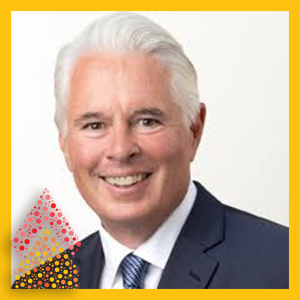 Friday, September 25 | 11:30 AM – 12:30 PM
David Greene | The Horizon Ahead: Stewardship, Sustainability, and the Future of Independent Schools
Demographic shifts, economic uncertainty, evolving family expectations, technological disruption, and increasing competition for students and philanthropic support are reshaping the landscape in which schools pursue their missions. What do these forces mean for trustees and school leaders charged with stewarding their institutions for future generations? We will explore the trends and challenges most likely to shape independent schools over the next decade. Examine how boards and senior leaders can balance mission and innovation, navigate financial and enrollment pressures, strengthen philanthropic engagement, respond to emerging technologies such as artificial intelligence, and position their schools for long-term sustainability.
Rather than focusing on any single challenge, this keynote invites you to think expansively about what it means to lead mission-driven institutions through uncertainty while remaining grounded in purpose. You will leave with a deeper understanding of the forces shaping independent education and a clearer sense of the questions trustees and school leaders should be asking as they prepare their schools for the future.
David A. Greene is the President of Colby College, where he has led transformational change since 2014. Before arriving at Colby, Greene was executive vice president of the University of Chicago and, prior to that, served in senior leadership roles at Brown University and Smith College. He serves on the boards of the Wyeth Foundation for American Art, the Marine Biological Laboratory at Woods Hole, and previously served on the Kents Hill School board. He is a member of the U.S. Council on Competitiveness and the American Talent Initiative. He previously served on the World Economic Forum Knowledge Advisory Board, the City of Chicago Science Board of Advisors, the Arthur M. Brazier Foundation Board of Directors, the University of Chicago Laboratory Schools Board of Directors, the Harvard University Alumni Board of Directors, and was president of the University of Chicago’s China and India Corporations. He received a bachelor’s degree in history from Hamilton College and a master’s degree in human development and psychology from Harvard University before earning a second master’s and a doctoral degree in education and social policy at Harvard, where he chaired the editorial board of the Harvard Educational Review.
Thursday, September 24
9:00 – 10:00 AM | Opening Keynote Session (see above)
10:15 – 11:15 AM | Case Discussion by Role
The Board’s Role During Times of Burnout, Stress, and Fatigue

Presented by: Jason Craige Harris, Speaker | Pollyanna
School leaders are faced with rising stress from demands from the community, faculty, and operations side of the business as well as managing the various crises and everyday urgencies of the job. This interactive session will explore the critical role boards play in supporting sustainable leadership, healthy governance practices, and institutional resilience during periods of high stress and burnout. The session will use realistic case studies to examine how boards can recognize warning signs, respond appropriately to leadership fatigue, clarify governance responsibilities, and foster cultures that prioritize sustainability without compromising mission and strategic priorities. We will engage in role-based discussions and explore how governance practices, communication patterns, and institutional expectations can either alleviate or intensify burnout across a school community.
11:30 AM – 12:30 PM | Topic Sessions
Choose one session to participate in live. All sessions are recorded for future viewing unless otherwise noted.
What Your Board Doesn’t Know—and Why That’s the Real Risk


Presented by: John Barrengos, Head of Program and Senior Consultant | Explo Elevate and Mike Peller, Head of School | Vermont Academy (VT)
When a small New England boarding school slid toward closure, the board didn’t know it was happening until March—far too late to intervene. Drawing on real case studies of schools that expanded brilliantly and schools that closed despite their communities’ best efforts, we will introduce four diagnostic questions that distinguish healthy governance from boards governing from stories rather than data. You will leave with a practical framework for understanding institutional equilibrium, a governance dashboard audit to bring to their next board meeting, and a clearer sense of what responsible trusteeship requires, not just in moments of crisis, but right now.
Economic Forces Shaping Independent School Sustainability

Presented by: Scott Clemons, Partner and Chief Investment Strategist | Brown Brothers Harriman
In this timely session, you will hear an accessible and engaging overview of the economic and financial trends influencing the long-term sustainability of independent schools. You will consider how emerging trends may affect enrollment and tuition revenue, philanthropy and fundraising, financial aid and access initiatives, auxiliary and summer programs, endowment performance, and other critical revenue streams that support institutional vitality. This session will help you connect macroeconomic trends to school-level realities, providing valuable context for strategic planning, resource allocation, and governance decisions. You will leave with a deeper understanding of the opportunities and challenges on the financial horizon and how thoughtful stewardship can strengthen your school’s resilience and sustainability for years to come.
Building & Sustaining a Thriving Board: From Recruitment to Succession Planning


Presented by: Margarita Curtis, Partner and Rick Melvoin, Partner | Strategic Leadership LLC
In this interactive session, two long-serving school heads discuss four key dimensions of building and sustaining a great Board of Trustees, including some less conventional ideas. Drawing on decades of experience leading independent schools and working with a wide range of schools in their consultancy, the presenters will move through each area with abundant examples and time for questions and discussion. You’ll leave with specific actionable ideas in each area, ranging from foundational practices to more sophisticated approaches.
Leading through Crisis: Governance & Communications


Presented by: Scott Hood, Former Senior Vice President for Communications and Public Affairs | Bowdoin College and Jim Hulbert, CEO | The Jane Group
Crises test a school’s leadership, governance structures, and community trust. During challenging situations, effective collaboration between the board and school leadership is essential to making sound decisions, maintaining confidence, and communicating clearly with stakeholders. We’ll explore the board’s role in crisis governance, common leadership and communication pitfalls, and strategies for effective partnership between trustees and school leaders. Drawing on real anonymized case studies from independent schools and higher education, presenters will examine emerging trends and challenges facing schools and guide you through practical scenarios that highlight governance best practices during times of uncertainty.
Rethinking Board Composition: Equity, Representation, and Philanthropic Engagement

Presented by: Tesha McCord Poe, CEO and Founder | Joy-Raising
Philanthropy and school governance are often intertwined, as trustees’ personal connections are often thought of as potential assets to school advancement goals. In this session, we will examine how wealth, social networks, access, and traditional philanthropic expectations can influence board recruitment and composition. Together we will identify ways to broaden trustee pipelines and reach beyond established networks without compromising governance or advancement goals. You’ll be asked to rethink assumptions about financial capacity and consider more expansive definitions of meaningful philanthropic engagement. Leave with practical strategies for aligning equity, representation, philanthropy, and institutional sustainability in board recruitment and engagement.
Governance 201: Roles & Responsibilities, Officers, and Committees

Presented by: Sara Goldsmith Schwartz, Founder and President | Schwartz Hannum PC
Unlike an introductory Governance 101 session, we will dig a little deeper in this 201 examination of board members’ roles and responsibilities alongside the work of board officers and committees through the lens of a trustee’s fiduciary duties. Designed for seasoned trustees, board chairs, and board officers, this session covers how strong governance structures and core board documents support effective leadership and decision-making in independent schools. Topics include how trustee agreements, codes of conduct, conflict of interest policies, etc. strengthen trustees’ ability to meet fiduciary duties, how boards can navigate actual or apparent conflicts of interest, how bylaws can be modernized to better support board and committee operations, and what an effective executive committee looks like, particularly in times of crisis. Please note that a recording will not be available for this session.
Friday, September 25
9:00 – 10:00 AM | Topic Sessions
Choose one topic session to participate in live. All sessions are recorded for your post-event viewing unless otherwise noted.
Rebuilding the Head–Board Relationship through Communication & Transparency


Presented by: Brooke Hopkins, Head of School and Deborah Farmer Kris, Board Chair | Riverbend School (MA)
All schools can experience moments when the Head–Board relationship feels strained, unclear, or misaligned, especially following a leadership transition once the “honeymoon phase” has ended. In this candid session, Brooke and Deborah share lessons from a year of intentional work—supported by a governance consultant—to strengthen and, in some cases, repair the Head–Board partnership. Designed especially for trustees, this session offers practical guidance for boards whose members may not have formal management training or deep familiarity with independent school culture. Through concrete examples and shared leadership reflections, participants will explore how communication, transparency, and explicit trust-building practices can reset expectations, clarify roles, and create healthier, more productive partnerships.
Using Annual Head Assessment as a Strategic Tool for Better Board Partnership

Presented by: Julie Faulstich, Principal | Stony Creek Strategy
The Head–Board partnership is one of the most important—and most complex—relationships in a school. One of the most important—but often underutilized—governance tools for strengthening this partnership is the Head of School assessment process. When thoughtfully designed and aligned with goal setting, the assessment process can serve as a powerful mechanism for strengthening partnership, clarifying expectations, and supporting school progress. Come learn how to reframe the annual assessment as a strategic governance tool that promotes meaningful dialogue, alignment, and continuous improvement. You’ll receive practical models, sample frameworks, and approaches your school can adapt. These include strategies for improving evaluation instruments, incorporating constituent feedback, and connecting assessment outcomes to annual goals and board–head communication throughout the year.
The Board’s Role in Leading Sustainable Transformation

Presented by: Cara Gallagher, Owner | Cara Gallagher Consulting
Independent school boards are often the driving force behind strategic initiatives, institutional transformation, and ambitious visions for the future. Yet even the strongest strategic plans can falter when boards lack visibility into the organizational realities that influence implementation, including trust, capacity, communication, alignment, and culture. We’ll discuss the board’s critical role in leading and pacing change in partnership with the Head. You’ll be shown research and case studies from independent schools that show how governance decisions shape the human experience of change and how boards can better assess an institution’s readiness for new initiatives, leadership transitions, and strategic priorities.
Building Your Board’s Capacity for Risk Oversight & Response



Presented by: Brian Garrett, Director and Chair of Education Practice Group | McLane Middleton, Kate Krehbiel, Board Chair and Amy Smucker, Head of School | Proctor Academy (NH)
How do boards and school leaders work together to establish meaningful risk oversight practices, monitor emerging legal and regulatory trends, and prepare for situations that may threaten the school’s mission, reputation, finances, or community trust? That is what we will dive into in this session. Examine case studies drawn from independent school settings that show both everyday risk management and high-stakes crisis scenarios. You will leave with a framework for ongoing risk oversight, clearer understanding of trustee responsibilities, and concrete tools for fostering productive board–administration collaboration before, during, and after challenging events.
How to Build a United Board & Avoid Factions
Presented by: John Littleford, Senior Partner | Littleford & Associates
Boards with cliques or factions are at risk of becoming dysfunctional, particularly during times of challenge or crisis. Boards composed primarily of current parents may form social alliances that make consensus difficult and slow effective decision-making. This session explores how a strong Committee on Trustees or Nominating Committee, paired with ongoing board governance training, can help build and sustain a unified, high-functioning board. You will learn best practices for board composition, leadership, and shared responsibility to ensure the board can respond decisively and cohesively when challenges arise.Governance Hot Topics for Independent School Trustees
Presented by: Sara Goldsmith Schwartz, Founder and President | Schwartz Hannum PC
Let’s focus on timely, real-world governance challenges currently facing independent school boards and leadership teams. Drawing on current issues in the field, Sara will guide you through emerging and high-impact topics that frequently surface in boardrooms and school communities. Examples of issues may include responding to community complaints and internal board culture crises and lessons from recent litigation and regulatory actions affecting schools—including student discipline, discrimination claims, historical misconduct cases, and regulatory enforcement actions. Additional topics may include enterprise risk management approaches, including tools for assessing and auditing institutional risk; and the board’s role versus operational leadership in responding to enrollment pressures and emerging technologies such as artificial intelligence. Please note that a recording will not be available for this session.
10:15 – 11:15 AM | Case Study Discussion by Role
Governance in Polarized Times: Navigating Political Difference and Institutional Values
Presented by: Jason Craige Harris, Speaker | Pollyanna
Navigating community tensions shaped by political polarization, public discourse about identity and belonging, evolving family expectations, and differing interpretations of school mission and values are challenges many schools face. At the same time, boards themselves are not immune to these dynamics. Trustees may hold deeply different personal, political, or philosophical perspectives while still sharing responsibility for stewarding institutional mission, culture, and long-term sustainability. Through facilitated discussion and realistic governance case studies, we will examine how boards can remain mission-centered and strategically aligned during periods of heightened polarization and community pressure.
11:30 AM – 12:30 PM | Closing Keynote (see above)
Thank you to our Governance Conference Steering Committee. Their generous support and input has helped shape our program.








Pictured from left to right:
Acera School
Advent School, The
Andover School of Montessori
Atrium School
Chatham Hall
Bancroft School
Bay Farm Montessori School
Beaver Country Day School
Belmont Day School
Berkshire Country Day School
Breakwater School
Brewster Academy
Brimmer and May School
Cambridge Montessori School
Carrollwood Day School
Charles River School
Charlestown Nursery School
Commonwealth School
Dana Hall School
Dedham Country Day School
Derby Academy
Derryfield School, The
Eagle Hill School
Fay School
Fayerweather Street School
Friends Academy
Gordon School, The
Governor’s Academy, The
Indian Mountain School
Inly School
John Bapst Memorial High School
John Winthrop School for Children
Kingsley Montessori School
Landmark School
Laurel School, The
Lexington Montessori School
Meadowbrook School of Weston
Moses Brown School
Mother Caroline Academy
Nantucket Lighthouse School
Nantucket New School
Nashoba Brooks School
Newman School, The
Newton Country Day School of the Sacred Heart
Oliverian School
Park School, The
Proctor Academy
Quest Montessori School
Sage School, The
Shady Hill School
Sharon Academy, The
Shrewsbury Montessori School
St. Andrew’s School
St. John’s Preparatory School
St. Mark’s School
Stoneleigh-Burnham School
Tenacre Country Day School
Tower School
Waldorf School of Lexington
Wolf School, The
Cancellations and transfer requests must be sent via email to info@aisne.org. Cancellations will receive a 100% refund, less a $50 administrative fee. Transfers of registrations from one person to another are permitted up to 2 business days before the start of the event, or the first event of a series of events.
Become part of a network of more than 260 schools across New England. Enjoy opportunities for your entire school staff and faculty to connect with and learn from peers, and engage in high quality professional development. AISNE is here to support your school’s excellence and continuous improvement.
Join today or renew your membership.